Cute Dandelion: A Whimsical Font for Creative Projects
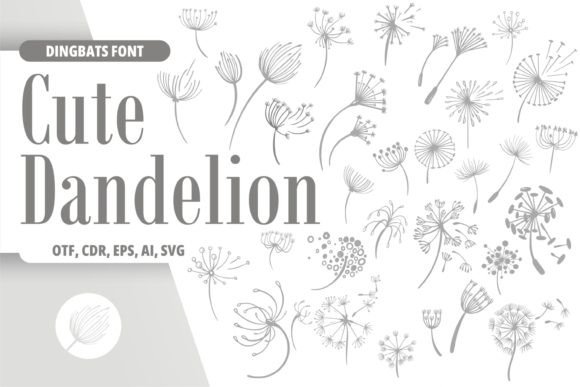
When a design needs a touch of organic charm, the choice of typeface becomes critical. Cute Dandelion is a premium font that steps away from the rigidity of standard sans serifs and the formality of traditional serifs. Instead, it offers a distinct personality as a decorative dingbat and display typeface. Unlike a standard script font that mimics cursive handwriting, this collection focuses on pictorial glyphs. Each character in the Cute Dandelion library is not a letter of the alphabet, but rather an intricate illustration of a dandelion—some with seeds blowing in the wind, others in full bloom, and some simply resting on a stem.
The visual style of Cute Dandelion is defined by its delicate line work. The illustrations capture the fragile nature of the real flower, translating it into vector art that remains sharp at various sizes. This creative font relies on high-contrast strokes to create depth without overwhelming the viewer. For designers, this offers a unique asset: a way to introduce botanical elements into a layout without sourcing external stock photography or complex vector illustrations. By typing a letter, you insert a cohesive piece of art.
Integrating Botanical Elements into Modern Branding
The versatility of Cute Dandelion extends well beyond simple decoration. In the realm of brand identity, consistency is key. A brand aiming for an eco-friendly, gentle, or organic aesthetic can utilize these glyphs as recurring motifs. For instance, a skincare brand might use specific characters from the font as icons for product ingredients or section dividers on their packaging design. Because the illustrations share a consistent stroke weight and artistic style, they instantly unify disparate design elements.
In editorial design, such as magazines or blogs focused on gardening, wellness, or lifestyle, these dingbats serve as excellent pull-quote accents or list bullet points. They break up the monotony of text-heavy pages, providing visual rest points for the reader. When considering font pairing, Cute Dandelion works best alongside clean, neutral typefaces. A modern typography approach would suggest pairing these floral glyphs with a geometric sans serif font. The simplicity of the text font allows the intricate details of the dandelion illustrations to shine without creating visual clutter.
Practical Applications for Digital and Print Media
The utility of this typeface spans both digital and physical mediums. For web design, the glyphs can function as custom list markers or background textures when tiled subtly. However, designers must consider file size and loading times when implementing custom icon fonts. On social media, Cute Dandelion excels. Social media graphics often require high-impact visuals that communicate a mood instantly. Using a dandelion glyph as a watermark or a central image in an Instagram story or Pinterest pin adds a layer of whimsical sophistication that standard emojis cannot match.
For small business owners and crafters, the applications are tangible. Imagine the impact on wedding stationery: menus, place cards, and invitations can be elevated with these botanical touches. Similarly, packaging design for artisanal goods—like honey, tea, or handmade soaps—benefits immensely from this aesthetic. The font acts as a design asset that bridges the gap between product and presentation. It signals to the customer that care and attention to detail have been applied to the brand.
Strategic Design Considerations
While Cute Dandelion is visually appealing, successful implementation requires strategic thinking. As a display font (specifically a pictorial one), it is not intended for body copy or long-form text. Its strength lies in accenting. Overusing the glyphs can dilute their impact and make a design look busy. A single, well-placed dandelion illustration often communicates elegance better than a page filled with them.
Evaluating project fit is crucial. This typeface leans heavily into a "cute" and organic aesthetic. It may not suit corporate environments requiring strict professionalism or high-tech startups looking for a futuristic vibe. However, for markets targeting families, nature lovers, or the handmade sector, Cute Dandelion is an ideal match. When testing the font, it is helpful to view the glyphs at the specific scale they will be used. While they are vector-based and scalable, the fine lines might lose visibility if the icon is reduced to a very small size, such as a favicon.
Finally, understanding the licensing of this commercial font is a non-negotiable step for professional work. Whether using it for client projects, merchandise, or digital products, ensuring the license covers the intended use protects both the designer and the client. Cute Dandelion provides a specialized toolset; when used with restraint and purpose, it transforms standard layouts into memorable, engaging visual experiences that resonate with audiences seeking authenticity and charm.